


Church vs 501(c)(3): Requirements, Differences, Pros & Cons


Key Takeaways
- Churches are automatically tax-exempt under federal law, while 501(c)(3) organizations must formally apply to the IRS for recognition.
- A church is not required to file an annual Form 990, giving it significantly greater financial privacy than a standard 501(c)(3) nonprofit.
- 501(c)(3) status provides formal IRS recognition, making it easier to access institutional grants and provide donors with confirmed tax deductions.
- Both structures prohibit private inurement and limit political campaign activity, but the IRS applies different oversight and enforcement mechanisms to each.
- At The Freedom People, we provide education on legal and administrative structures, helping individuals and organizations engage systems with intention.
The Real Distinction Between a Church & a 501(c)(3)
Churches are automatically tax-exempt under federal law without IRS approval, while 501(c)(3) organizations must apply formally and meet ongoing compliance requirements.
These two structures differ in reporting obligations, privacy protections, grant eligibility, and IRS oversight, and the choice between them has meaningful implications for any religious or mission-driven organization.
Below, you’ll understand how churches qualify under IRS criteria, what formal 501(c)(3) recognition requires, and how the two compare across the factors that matter most: tax treatment, financial disclosure, fundraising access, and accountability.
| The Freedom People: Reclaim Your Freedom Through Education & Structure Empowering Families & Individuals | 5★ Google Rating  Operate by Design, Not by Default: Learn how to navigate legal, financial, and administrative systems with intention—not ignorance. Understand natural law vs. statutory law, private vs. public operation, and sound money strategies. Protect your assets, identity, and decision-making through education, not evasion. What You’ll Discover: ✓ Trust structures and asset governance strategies ✓ Bitcoin and alternative payment systems for long-term wealth ✓ Status and standing clarification to reduce regulatory exposure ✓ Private domain operation while engaging public systems strategically Your freedom requires responsibility and structure. Start building both today. Book Your FREE Consultation → |
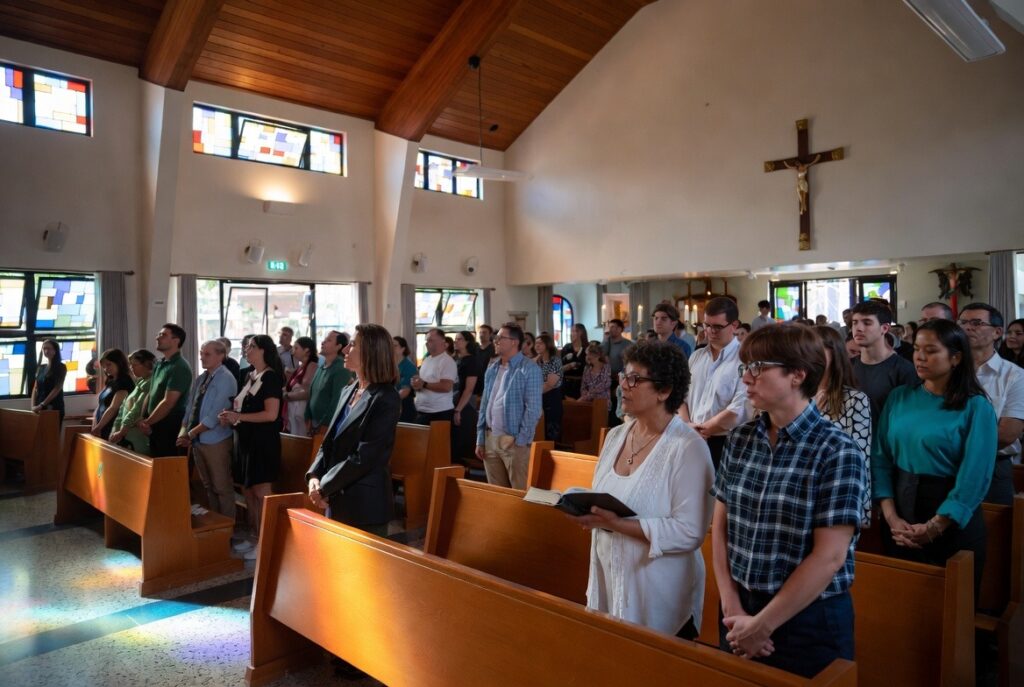
Requirements to Qualify as a Church?
The IRS does not provide a single statutory definition of “church,” but it applies a list of 14 characteristics when determining qualification. No single factor is decisive; the IRS weighs them together to assess an organization’s overall religious character and structure.
These characteristics include having a distinct legal existence, a recognized creed and form of worship, an established place of worship, a regular congregation, regular religious services, a formal code of doctrine and discipline, and ordained ministers. The IRS also considers a distinct religious history, the organization’s own literature, and Sunday schools for the religious instruction of the young, and schools for the preparation of its members.
A church does not need to satisfy all 14 criteria, but it must demonstrate a genuine and functioning religious structure. Organizations that exist primarily for social, political, or financial purposes will not qualify, regardless of how they describe their mission.
Requirements to Qualify as a 501(c)(3) Organization
A 501(c)(3) is a tax-exempt nonprofit that has applied to and received formal recognition from the IRS. It can serve religious, charitable, educational, scientific, or literary purposes. While churches automatically fall within the broader 501(c)(3) category, other nonprofits must go through a structured application process to receive the same recognition.
To obtain 501(c)(3) status, an organization must file Form 1023 or, if eligible, the simplified Form 1023-EZ, pay an application fee, and demonstrate that it operates for a qualifying exempt purpose.
- Form 1023 requires the submission of governing documents, such as articles of incorporation and bylaws.
- Form 1023-EZ requires only attestation that such documents exist, rather than their submission.
Once approved, the IRS issues a determination letter that formally confirms the organization’s tax-exempt standing.
Ongoing compliance requires filing Form 990 annually, maintaining accurate financial records, and adhering to restrictions on political activity and private inurement. Failure to meet these obligations can result in the revocation of tax-exempt status.

Key Differences Between a Church & a 501(c)(3)
Tax Exemption & IRS Recognition
Churches are automatically exempt from federal income tax under Section 501(c)(3) of the Internal Revenue Code without filing an application. Other nonprofits must submit a formal application and receive IRS approval before they can operate as a recognized tax-exempt entity.
This distinction affects how quickly an organization can begin accepting tax-deductible contributions and operating under legal protection.
Reporting & Privacy
One of the most consequential differences between the two structures involves reporting obligations. Churches are not required to file Form 990, the annual information return that most nonprofits must submit, which gives them a level of financial privacy that standard 501(c)(3) organizations do not enjoy.
Nonprofits with formal 501(c)(3) recognition must file Form 990, which becomes a public document. Donors, watchdog groups, and regulatory bodies can access these filings, making the organization’s financial activity visible and open to outside scrutiny.
Fundraising & Grant Eligibility
Formal 501(c)(3) status is often a prerequisite for institutional grant funding. Foundations, government agencies, and corporate giving programs frequently require applicants to provide an IRS determination letter before awarding funds. A church operating without formal 501(c)(3) recognition may be excluded from these sources, even though it is technically tax-exempt.
Donors contributing to churches without a determination letter may also find it harder to substantiate their deductions if audited. Formal recognition provides a clear paper trail for both the organization and its contributors.

Pros & Cons
Pros of Church Status
- No IRS application required to operate as a tax-exempt entity.
- No Form 990 filing obligation, preserving financial privacy.
- Higher IRS audit threshold under the Church Audit Procedures Act.
- Strong First Amendment protections over internal governance and doctrine.
Cons of Church Status
- No determination letter, which limits eligibility for institutional grants.
- Donors may struggle to substantiate deductions without documented IRS confirmation.
- Some banking institutions and organizational partners may request formal proof of tax-exempt status.
Pros of 501(c)(3) Status
- An IRS determination letter provides formal, verifiable proof of tax-exempt standing.
- Broad eligibility for foundation, government, and corporate grant programs.
- Simplifies donor contribution substantiation and strengthens organizational credibility.
Cons of 501(c)(3) Status
- The application process requires time, documentation, and filing fees.
- Annual Form 990 filing is mandatory and becomes a publicly accessible document.
- Ongoing compliance creates an administrative burden for record-keeping and reporting.
Church vs 501(c)(3): Comparison Table
| Feature | Church | 501(c)(3) |
| IRS Application Required | No | Yes (Form 1023 or Form 1023-EZ) |
| Automatic Tax Exemption | Yes | Only after approval |
| Form 990 Required | No | Yes (annually) |
| Public Financial Disclosure | No | Yes |
| Grant Eligibility | Limited | Broad |
| Donor Confirmation Letter | Not typically issued | Yes (determination letter) |
| IRS Audit Threshold | Higher | Standard |
| Political Activity Restrictions | Yes | Yes |
| First Amendment Protections | Strong | Moderate |
Choosing Between a Church and 501(c)(3) with The Freedom People

Deciding how to structure a religious or mission-driven organization is rarely as straightforward as it first appears. The gap between operating by default and operating by design shapes everything from financial exposure to governance autonomy, and most organizations encounter these distinctions only after they have already made structural commitments.
At The Freedom People, we work with individuals and organizations who want to make deliberate structural decisions before those commitments are made. If you are weighing which framework best suits your organization’s purpose, or clarifying the obligations you have already accepted, our education provides you with the foundation to act with clarity and responsibility.
Frequently Asked Questions (FAQs)
Can a church lose its tax-exempt status?
Yes. A church can lose its federal tax-exempt status if it engages in prohibited political campaign activity, permits private inurement to benefit insiders, or operates in a manner inconsistent with a religious purpose. The IRS applies a higher audit threshold to churches, but it retains full authority to revoke the exemption when clear violations are established.
Does a church need to incorporate to be tax-exempt?
Incorporation is not required for a church to qualify as tax-exempt under federal law. However, incorporating provides legal liability protection for members and leadership, creates a formal governance structure, and may be required by state law for certain activities. Many churches choose to incorporate for practical legal reasons even when it is not mandated for federal tax purposes.
What happens if an organization claims church status but does not qualify?
If the IRS determines that an organization does not meet the characteristics of a church, it may reclassify it as a standard nonprofit, require retroactive Form 990 filings, or revoke its tax-exempt status entirely. In cases of deliberate misrepresentation, penalties and back taxes may apply. Organizations should ensure they meet the IRS’s criteria before claiming church status without a formal determination.
Is 501(c)(3) status better than church status for receiving donations?
The difference comes down to verifiability. Donors contributing to a 501(c)(3) with a determination letter have documented proof of tax-exempt status, which simplifies record-keeping and substantiation in the event of an audit. Contributions to a church are also tax-deductible, but without a formal letter, donors may face greater scrutiny if their deductions are questioned.
How does The Freedom People help organizations understand their structural options?
At The Freedom People, we provide education focused on legal structure, administrative systems, and the distinction between private and public operation. Organizations operating a church or considering 501(c)(3) status benefit from understanding how these structures interact with statutory frameworks, what obligations each carries, and how to govern with intention rather than by default.
*Disclaimer:This article is for educational purposes only and is not intended as legal, financial, or tax advice. Always consult qualified legal or financial professionals for guidance. For details about our educational services, visit The Freedom People Services.





You must be logged in to post a comment.