


Natural Rights vs Human Rights: Meaning, Differences & Examples


Key Takeaways
- Natural rights are inherent to every person, derived from natural law or reason, and exist independently of any government or institution.
- Human rights are formally recognized entitlements codified in law and treaties that depend on institutional recognition to be enforced.
- Natural rights precede government, while human rights depend on political and legal structures for recognition and enforcement, making their source the key difference.
- Natural rights include life, liberty, and property; human rights include fair trial, education, and freedom from torture under international law.
- At The Freedom People, we teach how natural rights and legal systems interact, helping individuals engage public systems with clarity and intention.
The Philosophical Divide Between Natural Rights and Human Rights
Natural rights and human rights are often used interchangeably, but they rest on fundamentally different foundations. Natural rights belong to every person simply by virtue of being human: no government, constitution, or treaty creates them. Human rights, by contrast, are formalized through legal and political institutions, codified in documents like the Universal Declaration of Human Rights, and enforceable only where governments choose to recognize them.
That difference in origin reshapes everything that follows: who holds authority, what can be taken away, and if the individual exists before the state or through it.
This distinction has direct implications for how individuals understand their relationship to government, law, and institutional authority. Knowing which rights exist independently of any system and which depend on it for their existence shapes how people engage with both.
| The Freedom People: Reclaim Your Freedom Through Education & Structure Empowering Families & Individuals | 5★ Google Rating  Operate by Design, Not by Default: Learn how to navigate legal, financial, and administrative systems with intention—not ignorance. Understand natural law vs. statutory law, private vs. public operation, and sound money strategies. Protect your assets, identity, and decision-making through education, not evasion. What You’ll Discover: ✓ Trust structures and asset governance strategies ✓ Bitcoin and alternative payment systems for long-term wealth ✓ Status and standing clarification to reduce regulatory exposure ✓ Private domain operation while engaging public systems strategically Your freedom requires responsibility and structure. Start building both today. Book Your FREE Consultation → |
What Are Natural Rights?
Natural rights are rights that belong to every person simply by virtue of being human. They are not granted by governments, constitutions, or international bodies. Instead, they are understood to exist prior to any political structure, rooted in natural law, reason, or a higher moral order, depending on the philosophical tradition.
The concept has deep historical roots. Thinkers like John Locke identified natural rights as life, liberty, and property, rights that governments are formed to protect, not create. If a government fails to protect these rights or actively violates them, its legitimacy is called into question. Natural rights are described as pre-political because they do not require a court, legislature, or international body to declare them.
Their defining features are inalienability, universality, and independence from legal recognition. A person retains the right to their own life, whether or not any law acknowledges it, and no institution can legitimately strip that right away. The authority behind natural rights comes from natural law or inherent human dignity, not from the stroke of a pen.
What Are Human Rights?
Human rights are a formal legal and political category. They represent entitlements recognized, codified, and agreed upon through international frameworks, national constitutions, and legal institutions. The most widely known foundation is the Universal Declaration of Human Rights, which outlines a broad set of rights considered applicable to all people regardless of nationality or status.
Unlike natural rights, human rights require institutional infrastructure to be enforceable in any meaningful sense. A human right to a fair trial means nothing without a functioning judicial system. A right to education requires schools, policy, and funding. Human rights are real and meaningful, but their practical realization depends on governments’ and institutions’ willingness and capacity to uphold them.
Human rights can also expand over time. As societies change, new rights enter formal frameworks, rights to digital privacy, for instance, something that would not be possible if rights were strictly pre-political and fixed. This flexibility is both a strength and a limitation, depending on which political actors are shaping the framework at any given time.

Natural Rights vs Human Rights: Main Differences
The most fundamental difference between the two is their source of authority. Natural rights originate outside of human institutions. Human rights originate within them. This single distinction drives most of the practical differences that follow.
Natural rights tend to be a short, foundational list: life, liberty, property, and conscience are common examples. Human rights lists are broader, more detailed, and more context-specific. The rights to rest and leisure, or to participate in cultural life, appear in international human rights frameworks, but they would not typically appear in a natural rights framework because they require institutional support to be meaningful.
Enforceability is another dividing line. Natural rights can be violated, but no institution needs to recognize them for them to be valid. Human rights become practically enforceable only when governments or international bodies recognize and implement them. A person living under a government that refuses to honor rights frameworks may find both categories unenforceable in practice, but natural rights retain their philosophical validity regardless.
Finally, the relationship between the individual and the state differs sharply. Natural rights place the individual as prior to the state: the state exists to serve and protect rights it did not create. Human rights frameworks often treat the state as the mechanism through which rights are delivered, which subtly reverses that relationship.
Examples of Natural Rights vs Human Rights
To make the distinction concrete, consider how specific rights fall into each category.
Examples of natural rights include the right to life, the right to self-defense, the right to personal liberty, and the right to own and use property. These exist regardless of legal recognition. No government needs to pass a law for a person to have a claim to their own existence.
Examples of human rights include the right to a fair trial, the right to education, freedom from torture, the right to work, and the right to participate in government. These are enshrined in documents like the Universal Declaration of Human Rights and depend on institutional mechanisms to be honored.
Some rights appear in both categories; freedom of speech and freedom of religion are treated as natural rights by many philosophers and are also codified as formal human rights. The overlap exists, but the foundation and the enforcement mechanism remain distinct.
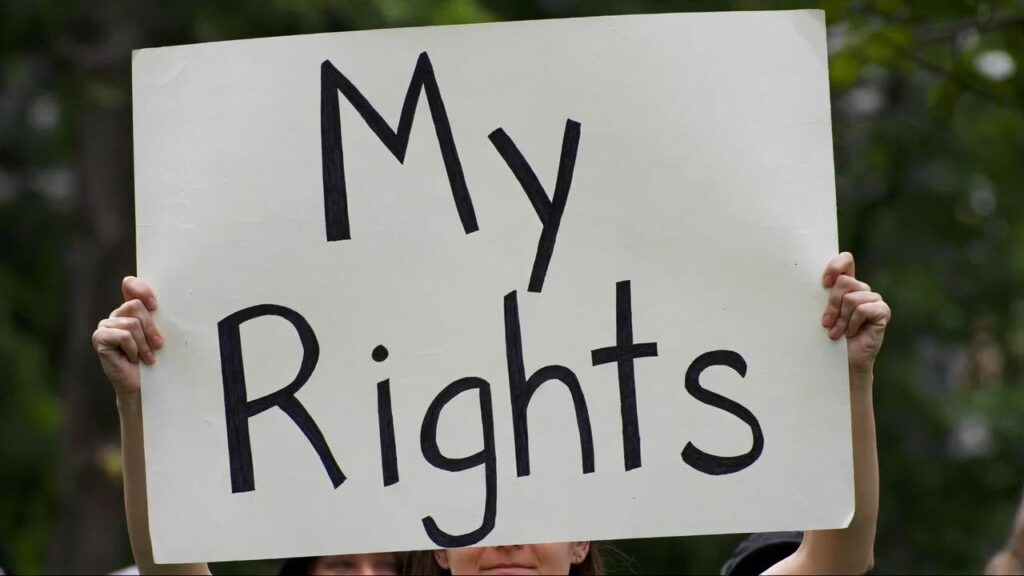
Natural Rights vs Human Rights: Comparison Table
| Category | Natural Rights | Human Rights |
| Source of Authority | Natural law, reason, inherent dignity | Treaties, constitutions, international institutions |
| Requires Government Recognition | No | Yes |
| Inalienability | Yes, it cannot be legitimately removed | Varies by framework and jurisdiction |
| Scope | Narrow and foundational | Broad and evolving |
| Examples | Life, liberty, property, conscience | Fair trial, education, freedom from torture |
| Enforceability | Moral and philosophical, not legally guaranteed | Legally enforceable where recognized |
| Relationship to the State | Prior to and independent of the state | Often delivered through the state |
Why The Freedom People Teaches This Distinction

At The Freedom People, we believe that most individuals interact with legal, financial, and administrative systems without ever understanding the philosophical ground on which they stand. When you recognize that natural rights precede government, that your rights are not permissions granted by an institution, it fundamentally changes how you engage with those institutions.
Our education programs are built around this foundation. We teach the difference between natural law and statutory law, how private and public systems operate differently, and how to use structures like trusts and sound money strategies to protect what matters most. Status and standing clarification is a core part of what we provide, helping individuals reduce regulatory exposure by understanding where they actually stand in relation to the systems that govern daily life.
We focus on understanding which systems apply to which areas of your life and making deliberate choices rather than uninformed ones. We work with individuals and families who are ready to take responsibility for their own governance.
Frequently Asked Questions (FAQs)
Are natural rights and human rights the same thing?
No. Natural rights are understood to exist independently of any government or institution, rooted in natural law or inherent human dignity. Human rights are formally recognized entitlements codified through treaties and legal frameworks. They overlap in some areas but differ in their source, scope, and enforceability.
Can natural rights be taken away by a government?
Natural rights are considered inalienable by definition; they cannot be legitimately surrendered or removed. A government may violate them in practice, but that violation does not mean the right ceases to exist. It means the right has been infringed upon, which is a critical distinction: an infringement is not the same as an extinguishment.
What is the philosophical basis for natural rights?
Natural rights theory draws primarily from natural law philosophy, developed by thinkers like John Locke and Thomas Aquinas, who argued that moral principles exist independently of human-made law. These rights derive from reason, conscience, or a higher moral order and apply universally to all people regardless of nationality, culture, or legal status.
Do human rights protect people the same way in every country?
No. Human rights are only as effective as the institutions that recognize and enforce them. In countries with strong judicial systems and international treaty commitments, many human rights are practically enforceable. In others, the same rights may exist on paper but carry little practical weight, which is one reason understanding the difference between rights that depend on institutions and rights that exist independently carries real-world significance.
How does The Freedom People help individuals understand their rights in practice?
At The Freedom People, we provide education on natural law versus statutory law, private versus public domain operation, trust structures and asset governance, and Bitcoin and alternative payment systems. Our approach focuses on understanding what systems apply to your life and engaging them intentionally. We work with individuals, families, and business owners ready to govern themselves through conscience, contract, and structure.
*Disclaimer: This article is for educational purposes only and is not intended as legal, financial, or tax advice. Always consult qualified legal or financial professionals for guidance. For details about our educational services, visit The Freedom People Services.






You must be logged in to post a comment.