


The Appearance of Justice – Introduction


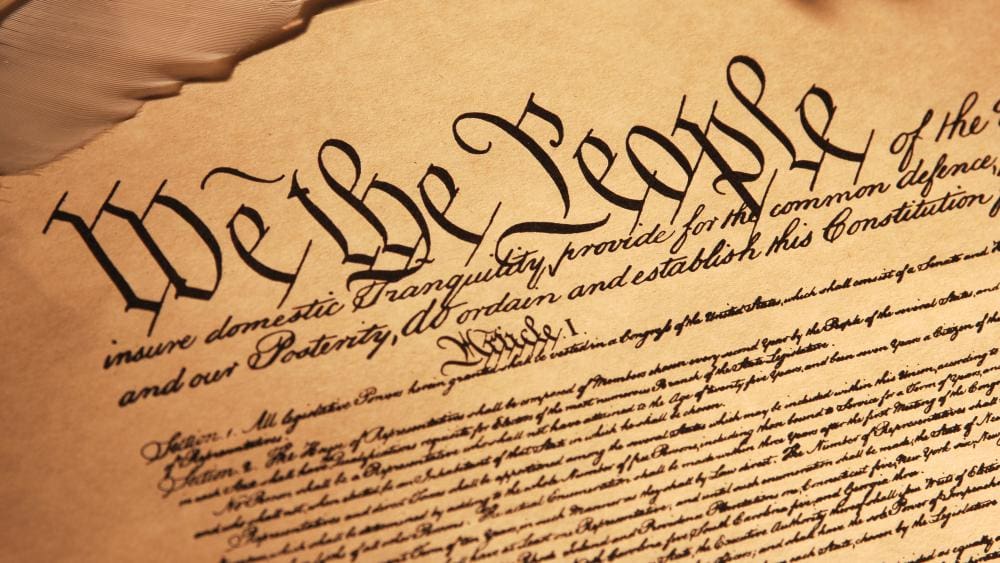
Before the ink was dry on the Constitution, the founders made their central concern explicit. The document they had written was not a grant of power to the government. It was a list of things the government could not do to the people.
The Bill of Rights did not say citizens have the privilege of free speech. It said Congress shall make no law abridging it. The Fifth Amendment did not offer due process as a courtesy. It prohibited the government from taking life, liberty, or property without it. The Sixth Amendment did not describe a benefit the state might extend to the accused. It guaranteed the right to a speedy and public trial, to confront witnesses, to have assistance of counsel.
The language is not accidental. The framers had spent years under a government that operated on different assumptions. They knew what it looked like when the state was both prosecutor and judge. They built a system specifically designed to prevent that arrangement from taking root on this side of the Atlantic.
That system is called an Article III court. It features a judge with lifetime tenure who cannot be removed for ruling against the government. It features a jury of citizens who answer to no agency and no department. It operates under rules of evidence designed not to help the prosecution but to constrain it. These features were not included because the founders were optimistic about human nature. They were included because the founders were not.
There are nearly two thousand federal administrative law judges in the United States. They are appointed by the agencies they serve. Their salaries are paid by those agencies. Their decisions are reviewed, in the first instance, by those same agencies. They preside over hearings in which the prosecuting party and the employing party are the same institution.
Before the Supreme Court ruled otherwise in 2024, the Securities and Exchange Commission's in-house judges presided over enforcement actions at a win rate that approached totality. In Article III courts — before independent judges and juries — the SEC won 61 percent of its cases.
The gap between those two numbers is not a curiosity. It is a description of what the word "impartial" means when the institution defining it also signs the paychecks.
When the Supreme Court addressed this arrangement in SEC v. Jarkesy, the majority found a Seventh Amendment violation. Justice Gorsuch, joined by Justice Thomas, wrote separately to argue that the violations ran deeper still — that the SEC's enforcement regime simultaneously violated the Due Process Clause of the Fifth Amendment and Article III of the Constitution itself. Three separate constitutional provisions, found wanting in a single enforcement structure, in a system that had operated for decades without a decisive constitutional reckoning.
The Court ruled in June 2024. The system it described had been in place since the New Deal.
Most Americans who receive a notice from a federal or state agency assume the word "hearing" means approximately what it means in a courtroom — a neutral presiding officer, rules that apply equally to both sides, a process designed to find the truth rather than confirm a result the agency has already reached. The assumption is understandable. In a significant number of cases, it is also wrong.
The federal civil asset forfeiture system processes 71 percent of Department of Justice forfeitures without a judge of any kind. These are administrative forfeitures — handled entirely within the seizing agency, presumed valid unless the citizen files a formal challenge within a strict deadline. The median value of those forfeitures is $1,678. The average cost of an attorney to contest one is $3,300.
The government is aware of both numbers.
The founders built a judiciary to keep the government honest.
What the government built in response is the subject of this series.
Book Your FREE Consultation →





You must be logged in to post a comment.