


The Bill of Rights Series

Introduction: Ten Amendments, One Idea, and Why It Still Matters
An introduction to a 10-part series examining the Bill of Rights — and the federal record of violating it.
Most Americans have heard of the Bill of Rights. Fewer have read it. Fewer still have considered what it actually does — not as a collection of noble sentiments, but as a set of hard limits written by people who had watched what governments do when no one stops them.
That distinction matters more than most civics classes suggest.
The Bill of Rights is not a list of gifts the government gave the people. It is a list of things the government is prohibited from doing. The people who wrote it did not trust government — including the one they had just created. They had spent years watching a distant government tax without consent, search without warrants, imprison without trial, and quarter soldiers in private homes. They won a war to escape it. Then they wrote down, in precise legal language, the specific abuses they intended to prevent from happening again.
What they wrote has not changed. What governments do has not changed either.
What the Founders Actually Believed
The Founders did not regard rights as things governments create. They regarded them as things governments can only protect or violate.
The Declaration of Independence states the premise plainly: people are endowed with certain unalienable rights, and governments are instituted to secure them. The government comes second. The rights come first. A government that violates the rights it was created to protect has inverted its own purpose.
James Madison, the principal author of the Bill of Rights, understood that parchment barriers — words on paper — are only as strong as the people willing to enforce them. He included the amendments not because he believed a list would automatically constrain ambitious officials, but because he believed a clear written record of what was prohibited would make violations harder to disguise and easier to challenge.
Thomas Jefferson made the complementary point: the price of liberty is eternal vigilance. Not occasional vigilance. Not vigilance when it is convenient. Eternal vigilance — meaning every generation has to do the work of understanding what these protections are, why they exist, and what it costs when they erode.
The Founders were not optimists about government. They were students of history, and history had taught them that power concentrated without limit produces the same results regardless of the intentions of the people holding it. The Bill of Rights is not a statement of faith in government. It is a structural response to a documented pattern.
What the Bill of Rights Actually Does
The first eight amendments address specific categories of government power that the Founders identified as most likely to be abused.
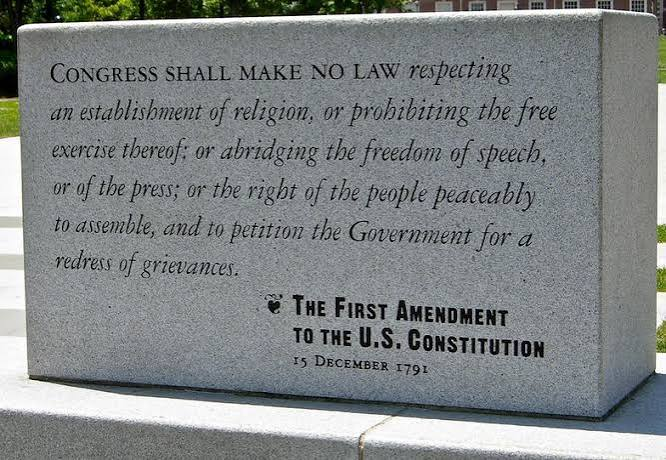
The First protects speech, press, religion, assembly, and petition — the tools by which citizens can organize opposition to the government that governs them. The Second protects the means of self-defense. The Third prohibits the military from occupying private homes. The Fourth requires warrants before searches and seizures. The Fifth protects against self-incrimination, double jeopardy, and the taking of property without due process and just compensation. The Sixth guarantees a speedy public trial, an impartial jury, the right to confront accusers, and the assistance of counsel. The Seventh preserves the civil jury. The Eighth prohibits excessive bail, excessive fines, and cruel and unusual punishment.
The Ninth says the list is not exhaustive — the people retain rights beyond those written down. The Tenth says the federal government has only the powers the Constitution grants — everything else stays with the states or the people.
Read together, the ten amendments describe a government that is powerful enough to perform its enumerated functions and constrained enough that it cannot dominate the private lives of the people who created it. The private individual — not the state, not the collective, not the majority — is the unit the Bill of Rights was written to protect.
Common Misconceptions
The Bill of Rights protects popular speech, mainstream religion, and conventional behavior.
It does not. It protects the speech the majority finds offensive, the religious practice the majority finds strange, and the behavior that challenges official preference. The majority’s views need no constitutional protection — they already have the votes. The Constitution was written for the minority position, the unpopular defendant, and the citizen whose interests conflict with what the government wants to do.
These rights are absolute.
They are not. Courts have developed exceptions, limitations, and balancing tests for every provision in the Bill of Rights. Some of those limitations are legitimate — no right is unlimited in any legal system. Others have expanded far beyond what the text supports. This series will address both. The existence of legitimate limits does not mean every limit the government claims is legitimate.
The Bill of Rights protects citizens from other citizens.
It does not. It protects citizens from government. Private individuals, private companies, and private platforms are not bound by the First Amendment, the Fourth Amendment, or any other provision. Whether government can use private entities as instruments to accomplish what it cannot do directly is a separate and genuinely contested question — one that the Twitter Files and related litigation have made more urgent. But the baseline is clear: the Bill of Rights constrains public power, not private conduct.
These protections are secured. The work is done.
It is not done. Rights that are not actively defended become rights that exist on paper and nowhere else. Every provision in the Bill of Rights has been violated by the federal government at some point in American history. Some violations were corrected by courts. Some were corrected only after the political moment that produced them had passed. Some have not been corrected at all. This is not a historical curiosity. It is the current situation.
Why Private Individuals Should Care Most
The person who has the most at stake in the Bill of Rights is not the politician, the lawyer, or the activist. It is the private individual who wants to live without being conscripted into someone else’s agenda — who wants to speak without government approval, worship without government interference, own property without government taking it, and go about daily life without government surveillance, prosecution, or coercion.
That person is the one the Bill of Rights was written for. Not the powerful, who have the resources to defend themselves through other means. Not the well-connected, who have access to officials willing to make exceptions. The ordinary person — the one who cannot afford a constitutional lawyer, cannot call a senator, and cannot absorb the cost of a prolonged legal fight with the federal government — is the one who depends most on the limits the Bill of Rights imposes.
When those limits erode, the erosion is not distributed equally. The people with resources navigate around it. The people without resources absorb it.
Government commercial and regulatory policy follows the same pattern. Licensing requirements, regulatory burdens, civil asset forfeiture, administrative penalties, and compliance costs fall most heavily on individuals and small businesses that lack the legal departments and lobbying operations of larger institutions. The private individual who wants to start a business, speak freely, own property without interference, or simply be left alone faces a federal regulatory apparatus that has expanded steadily for a century — largely without the explicit constitutional authority the Tenth Amendment requires.
The Bill of Rights does not guarantee that government will leave you alone. It establishes the conditions under which government is required to justify why it will not.
Why This Series
Each installment in this series examines one amendment — its text, its historical purpose, the specific abuses it was written to prevent, and the federal record of testing, limiting, or violating it. Modern examples are included because the violations did not stop in 1791. They adapted.
The goal is not to produce outrage. Outrage is easy and cheap and dissipates quickly. The goal is clarity — about what the text says, what it was designed to do, and what it costs when officials treat it as optional.
Thomas Jefferson believed that an informed citizenry was the only reliable check on government power. Not an angry citizenry. Not a partisan citizenry. An informed one — people who know what their rights are, where they came from, and what the historical record shows happens when those rights go undefended.
The Bill of Rights has survived two and a half centuries not because governments have been reliably restrained, but because enough people in enough generations understood what was at stake and acted accordingly.
The question this series ends on is the same one it begins with: does this generation understand it well enough to do the same?
Next: Amendment I — the government does not grant free speech. It can only take it away.





You must be logged in to post a comment.