


While the World Sells Bonds, Bitcoin Rises Through It

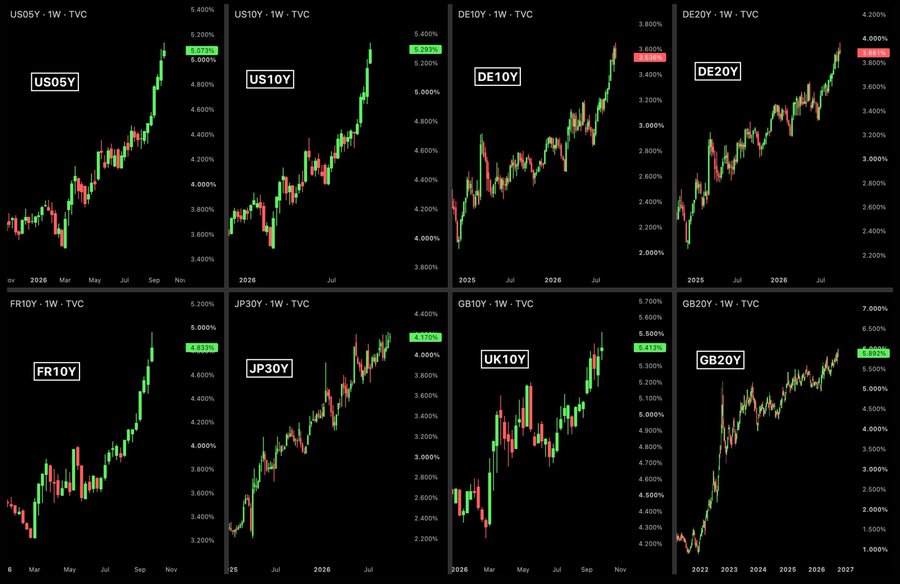
The world is finding out, all at once, what a government’s promise is actually worth.
The U.S. 10-year is sitting near 5.3%, a yield this country has not had to live with since 2007. The 30-year is above 5.6%, back at levels last seen around 2004. This isn’t an American problem. France’s 10-year is near 4.8%, the U.K. 10-year is above 5.4% with the 20-year gilt pressing 6%, and Japan’s 30-year has cleared 4.1% while its 10-year just touched a level it has not seen in thirty years. Germany — the bond the world still calls the safe one — is being repriced higher right alongside all of them. Washington. Tokyo. Paris. London. Everywhere you look, the yield on a government’s promise is screaming.
And Bitcoin — the asset that pays no coupon, has no issuer, and cannot be printed to meet a maturity wall — just did something it has never done before. It put together its first green July, August, and September on record.
July closed near $62,800, up about 7%. August closed near $78,600, up 25% — its best August in nearly a decade. September closed near $83,600, up more than 6%, breaking a pattern that had held for Bitcoin’s entire public life: not once in thirteen years had it ever closed both August and September green in the same year. This year it did. The quarter finished up roughly 43% — the second-best third quarter Bitcoin has ever recorded, trailing only 2017, and its first positive quarter since the third quarter of 2025. Price today, October 3, sits around $84,800 — more than 40% off the June lows near $58,500, and still about 33% below the all-time high of roughly $126,200 set on October 6, 2025. Three green months in a row — a first. The bear did its job. The recovery is doing its own.
Here is the thing the textbooks cannot explain.
The official story says a 5% risk-free rate should kill anything that does not pay you to hold it. Gold has felt it. Equities flinch every time the long end gaps higher. Bitcoin flinches too, on the bad days. Late September handed it the ugliest bond tape in nearly two decades, oil still distorted by fighting in the Middle East, and a Federal Reserve that hiked for the first time since July 2023. Bitcoin dipped. Then it held. Over the entire quarter, it did not follow the bond market down. It rose through it.
That is the signal.
This selloff is not a mystery. Governments are issuing into a deficit they refuse to close. The five biggest AI hyperscalers alone issued $121 billion in U.S. corporate bonds in 2025 — against an average of just $28 billion a year from 2020 through 2024 — and 2026 is already running hotter still. That paper competes directly with Treasuries for the same buyers. Real yields are back near 2008 levels. The term premium is being demanded again because the buyer of last resort is hesitating.
A bond is a claim on someone else’s future taxation. When the yield on that claim has to rise this far, this fast, across this many countries at once, the market is not celebrating a healthy rate. It is charging a premium for the risk that the promise gets diluted. There is no such thing as a risk-free asset issued by an entity that can print the unit the asset is denominated in. There is only a yield that rises until someone blinks.
Bitcoin has no maturity wall. It has no coupon to defend. It has no finance ministry and no central bank. It has 21 million coins — a supply schedule that does not negotiate — and a network that never closes. Twenty million of those coins are already in circulation. The float is not getting bigger to absorb the panic. The panic has to find a clearing price against a fixed base.
So what is the rise actually saying?
It is saying the market is beginning to separate the asset with an issuer from the asset without one. Day to day, Bitcoin still trades like a risk asset — a hot auction, a spike in oil, a hawkish headline, and it gives some back without apology. But over the quarter that mattered, it behaved like the exit. Capital stepped in while yields were rising, because the thing being repriced was the collateral — not the alternative to it.
You do not need Bitcoin to replace the bond market. The bond market is north of a hundred trillion dollars, several times that on the broadest count. Bitcoin does not have to win that fight. It only has to become the asset a serious allocator reaches for when the risk-free rate stops being risk-free. A few percent of that flow, against a capped supply, is not a narrative. It is a price.
We just printed the first all-green third quarter of its kind — into the worst bond tape since the years before the last financial crisis. The people waiting for yields to calm down before they take Bitcoin seriously are waiting for the old collateral to become trustworthy again.
It’s not going to.
Bitcoin is still Bitcoin. The bond is still a promise. One of those has a fixed supply. The other just showed you what happens when the world stops believing the promise at the old price.
The Quarter That Ended the Bear
September did not look like a victory lap, and that is exactly why it matters. Bitcoin closed the month near $83,550, up 6.3%, after a year in which September has averaged a loss and after a decade in which every single green August had been followed by a red September — not once, going back to 2013, had both months closed green together. August had already done the violent work, up 25% and the best month of 2026. July opened the sequence, up about 7%. September’s job was simpler and harder. It had to hold. It held, and it closed green, and with that close Bitcoin printed the first July, August, and September in its entire history to finish green together.
Stack the three months and the quarter stops being a mood. It becomes a number. The third quarter closed up 42.71%. That is the second-best third quarter on the books going back to 2013, a nose ahead of 2013’s own 40.6%, and behind only the mania quarter of 2017. It is the best third quarter in nine years. It snapped three straight losing quarters — a 23% decline in the fourth quarter of 2025, a 22% drop in the first quarter of this year, a 14% drop in the second — and it did it in a quarter that has historically given you less than most, averaging under 9% across Bitcoin’s history. This one did nearly five times that, while the global bond market was busy repricing sovereign debt to yields a generation of portfolio managers had never had to mark.
Go back to the low and the shape gets clearer. The last day of June put Bitcoin near $57,750, about 54% under the all-time high of roughly $126,200 set on October 6, 2025. From that print to the September close is a move of nearly 45% in a single quarter, and the year is still red against the January open. That is not a new bull market announcing itself on television. That is a bear market low being left behind while most of the crowd is still describing the tape they remember from February.
Now here’s the part that matters more than the win. The signals did not all agree. Pretending they did is how people get hurt.
The classic capitulation checklist did not light up this time. In 2018 and in 2022, price spent months trading below what the average holder had actually paid for their coins, and the broader network sat underwater for an extended stretch — most people holding Bitcoin were sitting on a loss, not a gain. None of that happened this time. The price never closed a single day below that average cost basis. Even at the depths of the June selloff, the typical holder was still in profit, not in pain. If your definition of a bottom requires the average holder to be destroyed first, this bear refused to give you that ceremony. It was faster, it was shallower, and it stopped 54% down instead of the 80-plus percent collapses that defined the last two cycles.
What confirmed the low instead is the set of signals that actually fired. A moving-average crossover that has flagged nearly every major cycle low since 2015, without a miss, triggered again in mid-September. Price reclaimed a longer-run average cost level near $77,000 and has held it since. The monthly structure flipped from a three-quarter losing streak to three green months in a row, which is what a completed decline looks like on a calendar rather than a sentiment gauge. And the money followed the turn. U.S. spot Bitcoin ETFs took in roughly $6.3 billion across the third quarter, after shipping close to $5 billion out the door in the second, with August alone pulling in $3.5 billion and September still positive near $2.7 billion even after a rocky start to the month. Forced sellers exhausted themselves. Patient capital came back in through the regulated pipe. That is a bottom. It is just not the bottom the last cycle trained you to wait for.
The low is in. The bear is not a debate anymore, and the live argument is no longer whether the June low holds — it holds until something actually breaks $58,000, and nothing in this tape is trying. The argument now is the ceiling. A large share of supply hasn’t moved in years, held by people least likely to panic-sell, and much of it was accumulated between $84,000 and $85,000 — exactly where price is working right now. The next level analysts are watching as a magnet for price sits up near $97,000, with traders already positioning for it. A confirmed bottom is not a delivered all-time high. It is the moment the asymmetry flips. The quarter you just watched was the flip.
Liquidity is Stagnant – Altcoins Need Stable Coin Growth To Thrive
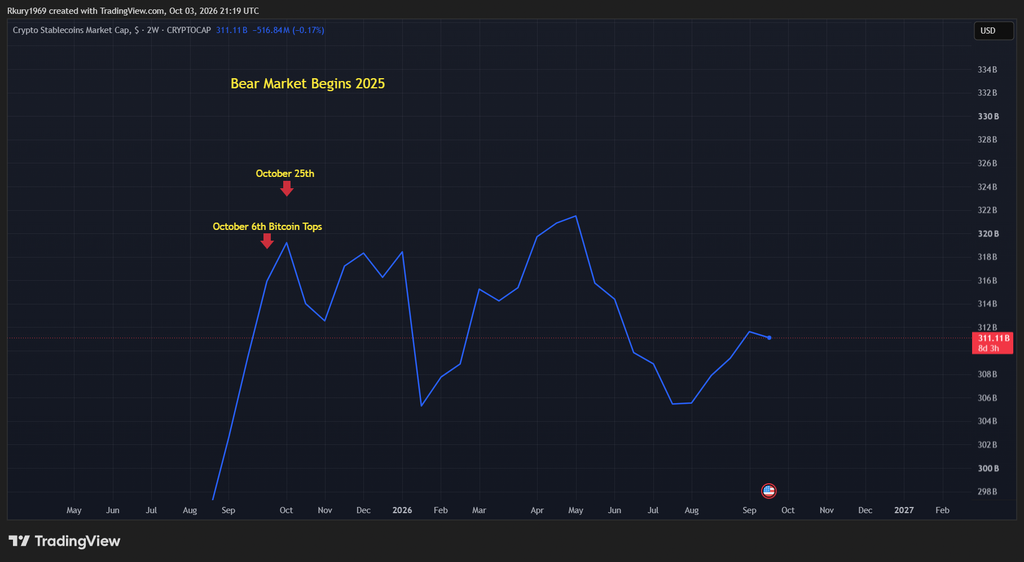
The Bid Came Back. The Casino Did Not.
The altcoin market did not get a rise. It got a short list. Hyperliquid, Solana, Zcash, Monero, and now NEAR actually did something while most of the board kept leaking against Bitcoin, and no two ran for the same reason. Two ran because a real business caught a bid. One ran because privacy found a regulated door. One ran because privacy still has not. One ran because artificial intelligence finally got a ticker. Treat them as one trade and you get paid on the headline, robbed on the difference.
Hyperliquid is the cleanest of the five. HYPE trades near $89, about 9% under an all-time high of $98 set on September 23, after opening the year near $25 — up roughly 250%, with August alone a 60% month. Total value sits near $20 billion. This is not a meme catching a weekend; it is a trading platform for leveraged crypto bets that kept printing volume through the bear, with a token built to funnel activity back to holders — the price just caught up to the usage. A coin 9% off its high after a 250% year is not a hidden bargain. It is a leader already found, and leaders give back fast once buying slows.
Solana is the institutional name, a different compliment than being the top performer. SOL sits near $120, up about 48% over ninety days but still down roughly half over the past year, with the January 2025 high near $296 still 60% overhead — a recovery, not a breakout. What changed underneath is harder to fake: the network processed on the order of 14 billion transactions in the third quarter, up 45% and the heaviest quarter it has ever logged, with around 4 million wallets active daily. U.S. spot Solana funds took in about $272 million in September alone, pushing total inflows since launch to roughly $1.6 billion. Usage plus a brokerage ticker is how a chain survives a bear. It is not how you get the year Zcash just had.
Zcash is the number that does not look real until you sit with it. ZEC trades around $1,300 — up roughly ninefold over the trailing year, about 160% year to date, still near 60% on the month even after a rough week into October. Total value crossed $20 billion, inside crypto’s top ten. Grayscale’s Zcash fund briefly cleared $1 billion in assets the same stretch the broader crypto ETF market took in more than $3 billion outside Bitcoin, before giving $78 million of that back the following week. A privacy coin just got a billion-dollar regulated wrapper, and a reminder the same door swings both ways. A coin that can do 900% can undo a fortune in a few weeks, and whoever showed up for the headline will be first out.
Monero is the one to handle with both hands. XMR trades near $555, up about 25% this year and 67% over the past year, with the January high near $800 still 31% above — a grind, not a mania. Daily volume sits near $80 million versus over $600 million on Zcash. There is no U.S. spot fund for it, and there will not be one under current rules: Monero is private by default, and the regulated door that opened for Zcash does not open here. That is the feature and the trap: the demand is real, the market is thin, and a thin privacy-coin market is where a good thesis gets a terrible fill.
NEAR earns its seat for one reason: it is the AI chain that cleared both bars — it performed, and a U.S. spot fund now exists for it. NEAR trades near $4.70, up roughly 200% on the year against a far more ordinary trailing-year gain of 56%. Total value is about $6.2 billion, still 77% under its all-time high of $20.60 from January 2022. The pitch is not just a sticker: the rail letting software agents swap and settle without a human has processed about $32 billion, up from under $1 billion a year ago, though revenue has not kept pace — still tens of millions against a $6 billion token. Bitwise’s spot fund, ticker NRR, listed on NYSE Arca September 29, the first U.S. spot product for the coin; launch day was profit-taking, not a coronation, the price pulling back nearly 5% as institutions bought the regulated share from the holder who got there first — same pattern as Solana and Zcash.
Here is the caution, and it sits on top of all five. Liquidity has not returned to the altcoin market. It has returned to a handful of pipes. The gauge tracking a broad altcoin season was still in the mid-50s in late September; the line that marks a real season is 75. The AI-token basket gained about 54% in September, and the whole category is still only about $15 billion — the smallest sector on the institutional map. What is there is a committee: Bitcoin funds took in about $2.4 billion the week ending September 25, the best week since October 2025, flipping the year’s flows positive, with Ethereum, Solana, XRP, and Zcash funds green in the same window. That is allocation, not a crowd. Committees buy the wrapper, not the long tail, and sell it the morning the mandate changes.
So the revival is real, and it is not yours yet. Hyperliquid earned a high by shipping. Solana earned a ticker by being used. Zcash earned a year for the history books, and a drawdown that can still take most of it back. Monero earned a bid in a market that can barely hold the inventory. NEAR earned a candle and a spot fund at the intersection of AI agents and a brokerage account, with a revenue line still behind the story. Until breadth confirms, this is a spectator sport with a short roster. Bitcoin first, these five on a list — everything else waits until the liquidity that has not come back finally does.
Claude AI Bitcoin Market Analysis
Where We Stand
Bitcoin trades near $84,800. That is roughly 33% below the all-time high of $126,200 set on October 6, 2025 — a year and change off the peak — and it is the close of the third straight green month. July, August, September: all green, for the first time in Bitcoin’s history. No hedging needed here. The chart says what it says. A bear market that took price down 54% from high to low has given back more than it took, and it did so without the market ever agreeing on when it started.
Sentiment Picture
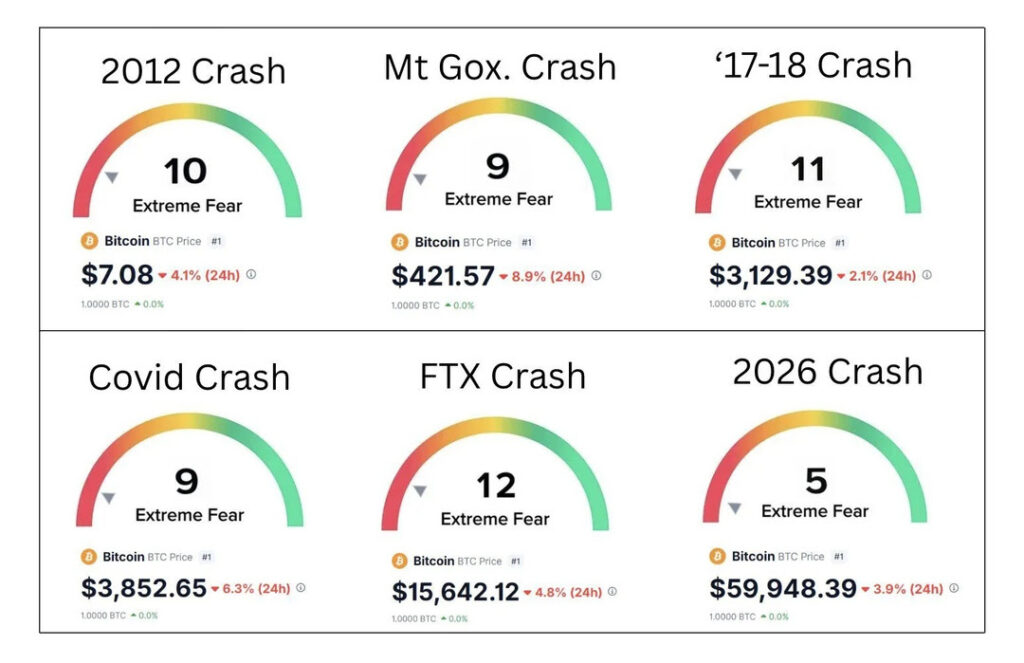
Sixty-eight. That is where the Fear and Greed Index sits today, and it has not dipped out of Greed territory since September 23 — eleven straight days. Read that as what it is, not what the number alone implies. Eighty-five-plus is where this gauge usually sits right before leverage gets stupid and tops get made. Sixty-eight is a market that believes the move without yet losing its head over it — greedy, not delusional. Eight months ago this same index was printing single digits, the kind of reading that shows up once a cycle, while Bitcoin was down 52% and buried in panic. A market does not travel from single-digit terror to a calm, sustained Greed reading by accident. It travels there because the thing people were terrified of stopped happening.
The Critical Divergence
Here is where conviction gets tested against the tape. Retail sentiment indicators and committee money are not telling the same story, and that gap is the whole game right now. U.S. spot Bitcoin ETFs took in about $2.7 billion in September, anchored by a single week — September 21 to 25 — that alone pulled in $2.4 billion, the best week since the October 2025 top, and strong enough on its own to flip 2026’s year-to-date flows from negative to positive, landing near $934 million in the black for the year. That is not a retail crowd piling in on a green candle. That is allocators who spent the first half of the year pulling capital out finally putting it back to work, on a schedule that has nothing to do with what any individual trader feels about the Tuesday close.
Strategy did not blink once during any of this. The company’s own SEC filings show 847,666 BTC held as of September 27, at an average cost basis of $75,437 per coin — meaning every coin in that treasury is sitting on a gain at today’s price. The most recent purchase, disclosed the same week, added 1,665 BTC at an average of $85,681, bought slightly above the current spot price, during a week when plenty of smaller holders were still deciding whether the rally was real. Strategy was not deciding. Strategy was buying.
Technical Structure
The long-term holder supply wall at $84,000 to $85,000 is the number from the on-chain picture that matters most for price action specifically: it is exactly where price sits right now, which is why the market has stalled here rather than run straight through. A wall like that does not get cleared on sentiment alone — it gets cleared when buying is persistent enough to absorb sellers who have waited years for exactly this price to show up. That is the test happening this month, not a future one. Above it, the next real magnet is near $97,000, where the broader cost-basis structure of the network would need price to revisit before anyone can credibly call this cycle’s recovery complete. Below, the floor is not a guess — it is a printed fact. The June low of $57,750 was tested, held, and never approached again through an entire quarter of global bond-market chaos. The 52-week range, then, runs from that $57,750 low to the $126,200 high — a reminder of how much ground has already been covered in both directions inside a single year.
Macro Overlay
The backdrop is not calm, and Bitcoin’s September does not pretend otherwise. The Federal Reserve hiked in September for the first time since July 2023, with the market pricing another move before year-end. The U.S. 10-year sits near 5.3%, a level unseen since 2007, with sovereign yields rising in lockstep across Germany, France, Japan, and the U.K. Oil remains distorted by fighting in the Middle East. Hyperscaler debt issuance for AI infrastructure is already running past $150 billion this year, competing directly with Treasuries for the same pool of buyers. None of that stopped Bitcoin’s best quarter in nine years. That is not a coincidence either.
Monthly Outlook: Three Scenarios
Bullish, 35% probability: Bitcoin clears the $84,000 to $85,000 supply wall cleanly, ETF demand stays positive through October, and price grinds toward the $97,000 mean-reversion level before year-end, with $100,000 coming into view as a psychological magnet rather than a ceiling.
Neutral, 45% probability: price chops inside the $78,000 to $88,000 range for most of the month, digesting the supply overhang while liquidity slowly rebuilds beneath it. Sentiment cools from Greed back toward Neutral without the uptrend actually breaking.
Bearish, 20% probability: a fresh leg in the bond selloff, a Fed surprise, or an oil shock drags Bitcoin back toward $75,000 to $78,000. The June low at $57,750 is not seriously threatened under this scenario — it would take a genuine macro accident, not a normal correction, to put that floor back in play.
The Number That Matters Most
Strategy’s 847,666 BTC is worth sitting with for a moment. At current issuance, the Bitcoin network mints roughly 164,000 new coins a year. One company’s treasury now holds the equivalent of more than five years of the entire network’s future production. That is not a trading position. That is a company that has done the math on what 21 million actually means and decided to own as much of it as it structurally can, regardless of the price printed on any given Tuesday.
Summary and Strategy
The quarter just told you something the headlines will spend weeks arguing about: the old collateral is being repriced everywhere at once, and the new collateral just posted its best quarter in nine years anyway. You do not need every indicator to agree with you to be right. You need the ones that matter — the ones that measure supply, cost basis, and who is actually buying — and right now those line up. The supply wall at $85,000 is real, and it may take time to clear. That is not a reason to wait on the sidelines for certainty that will never arrive before the price does. It is a reason to keep stacking through the chop, because the 21 million ceiling does not negotiate with anyone’s patience, and the people who waited for the fear to fully clear before buying in February are the same people explaining this rally from the outside today.
Final Thoughts
Look at what actually happened this quarter, because the headlines will flatten it into noise. The entire developed world repriced its own debt at once — U.S. yields at levels unseen since 2007, U.K. gilts at their highest since 1998, Japan’s long bond at a thirty-year high — and Bitcoin rose through it. July, August, September: three green months in a row, a first in its history, closing its second-best third quarter ever. It did that without the brutal capitulation the last two cycles demanded — no months underwater, no network-wide surrender, just a low near $57,750 tested once, never revisited. That is not luck. That is a fixed-supply asset behaving like one, right as its alternative started looking less fixed by the week.
The altcoin market told the truth about itself too: not a tide, a short list. Hyperliquid, Solana, Zcash, Monero, NEAR — five names that did something while the rest of the board kept leaking against Bitcoin. Real businesses caught real bids. Privacy found a regulated door in one case and stayed locked out in another. AI finally got a brokerage ticker. None of that is a reason to chase the long tail — it is a reason to notice that even in a genuine revival, liquidity went exactly where institutions sent it, nowhere else. Committees buy wrappers, not stories.
Which brings you to where the quarter left you: $84,800, about a third off the all-time high, pressed against a wall of long-term holder supply at $84,000 to $85,000 that has to be absorbed before the next leg starts. Sentiment sits at 68, firmly Greed, confident without being delusional. Underneath it sits the divergence that matters: U.S. spot Bitcoin ETFs pulled in $2.4 billion in a single week, flipping the year’s flows positive, while Strategy’s own SEC filings show 847,666 BTC on the balance sheet at an average cost well below today’s price, bought by a company that kept buying the very week most people were still deciding if the rally was real. The largest, most transparent Bitcoin treasury on earth is doing arithmetic on a 21 million coin ceiling and concluding patience is cheaper than certainty.
That ceiling is the whole thesis, and it has not moved an inch all year while every other promise around it has had to. Governments cannot print their way out of a fixed supply. Committees cannot out-allocate a number that does not negotiate. The $85,000 wall gets absorbed on its own schedule — either way, there will only ever be 21 million of these, and the world just spent a quarter learning what its alternative is worth by comparison. You do not need to call the week it breaks. You need to already own the thing before it does, because whoever explains this move after the fact will be the one who read about it instead of holding it. The window does not stay open because you waited for a cleaner entry. It closes whether you used it or not.
All information provided is for educational purposes only. It is essential to conduct your own research before making any financial decisions. This is not intended as financial advice.
Stay Free!
Kury




You must be logged in to post a comment.